

Secure Video Conferencing and AV Solutions for Government
- May 23, 2026
- Posted by: Abhishek Pratap Singh
- Categories: AV-Tech, Blogs
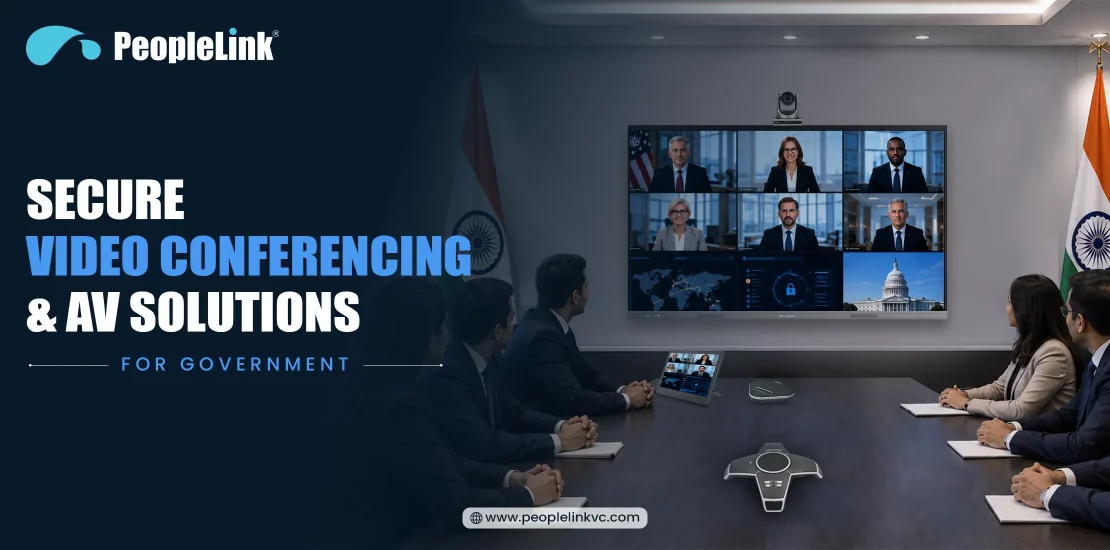
Government agencies handle highly sensitive data every single day, making them a prime target for sophisticated cyber threats. A single leak, unencrypted stream, or intercepted meeting can compromise national security, expose citizen data, and shatter public trust.
As public sector teams shift to hybrid work, standard commercial software and fragmented hardware setups simply cannot provide the ironclad protection required for confidential discussions. Deploying dependable Video Conferencing Solutions bridges this gap—delivering enterprise-grade safety, strict regulatory compliance, and seamless scalability for modern public operations.
Why Standard Video Conferencing Tools Fail the Public Sector
Many agencies have learned the hard way that everyday commercial meeting apps leave doors wide open to attackers. When public sector teams use standard, consumer-grade communication tools, they face severe operational risks.
- Critical Data Privacy Risks: Standard platforms often route data through shared public clouds, exposing sensitive conversations to data mining or foreign surveillance.
- Unauthorized Meeting Access: Weak access controls can lead to “meeting bombing,” where uninvited users crash confidential sessions.
- Substandard Encryption: Many apps encrypt data only while it travels, leaving it vulnerable at the server level. True security requires protection at every stage of communication.
- Severe Compliance Failures: Commercial apps rarely meet stringent government standards like FedRAMP, FIPS, or SOC, resulting in legal and regulatory penalties.
- Hardware and Software Disconnect: Mixing third-party cameras and microphones with generic software creates security blind spots, driver failures, and unencrypted endpoints.
Key Features of a Government Video Conferencing Platform
To keep public sector data safe, a government video conferencing platform must be built differently from commercial alternatives. Look for these essential security features:
- End-to-End Encrypted Meetings: True end-to-end encryption ensures that only the meeting participants can decrypt the audio and video feeds. Not even the service provider can see or hear your discussion.
- Multi-Factor Authentication & RBAC: Multi-factor authentication prevents identity theft by requiring secondary verification. Role-Based Access Control ensures that users can access only the meetings and files permitted for their roles.
- Secure Access Permissions: Features like digital waiting rooms, passcodes, and the ability to lock meetings give hosts total control over who enters the room.
- On-Premise vs. Private Cloud Deployment: Agencies can choose to host the software on their own physical servers or within an isolated, dedicated private cloud.
- Audit Trails & Secure Logs: Automated, tamper-proof logs track exactly who attended a meeting, when they joined, and what files were shared.
- Strict Compliance Certifications: Look for platforms independently certified for regional government standards, FIPS encryption guidelines, and GDPR to guarantee data sovereignty and legal compliance.
PeopleLink: Unified Secure AV Hardware & Software Ecosystem
When evaluating an infrastructure built specifically for stringent government parameters, PeopleLink stands out as a global leader in single-OEM (Original Equipment Manufacturer) AV hardware and secure software solutions.
Unlike multi-vendor models that create security vulnerabilities through fragmented integrations, PeopleLink designs its entire collaboration framework in-house. This closed-loop design eliminates the risk of hardware-level interception, “reduces vendor sprawl and lowers the Total Cost of Ownership” for public budget offices.
Built-In Low-Bandwidth Optimization
A common roadblock for public administration is connecting remote municipal or rural offices where internet infrastructure is limited. PeopleLink’s WebRTC-based architecture (like InstaVC) is uniquely engineered to deliver crisp, secure audio and full-HD video streams over optimized bandwidth. This ensures that field operatives and local civil servants stay connected without encountering constant screen freezes or dropouts.
Case Study: Implementing Smart VC in Government Offices
Modern deployments demonstrate how combining secure software with tightly integrated AV endpoints creates a resilient environment for public sector operations. For instance, in complex deployments like municipal development and public works command centers, fragmented hardware is entirely replaced by a singular ecosystem outlined in the PeopleLink Video Conferencing Solutions for Government framework.
By utilizing high-performance components from the PeopleLink Products Portfolio—such as the Elite 4K Premium Series PTZ Camera, alongside an AI.Live Board Core Series central engine—an agency can control the entire data path. Audio picked up by the Wired Digital Conference System is amplified and processed locally, preventing external signal tapping. This setup allows agencies to connect regional offices, conference rooms, and local departments through a unified and secure communication pipeline.
Real-World Government Use Cases
From daily operations to high-stakes emergencies, secure communication solutions for government agencies keep teams aligned and citizens safe.
Defense and Law Enforcement Command Centers
Military and police forces use PeopleLink’s secure AV setups and encrypted video conferencing for public sector operations. They share tactical intelligence, coordinate field responses, and conduct secure briefings across mission-critical video walls without risk of interception.
Judicial Virtual Hearings
Courts rely on integrated AV room solutions and virtual meetings for public administration to hold remote arraignments, witness testimonies, and legal consultations. High-fidelity audio ensures absolute legal clarity while reducing inmate transport costs.
Crisis Response and Emergency Coordination
During natural disasters or cyberattacks, leadership teams use these tools as secure, high-availability command centers to coordinate multi-agency responses in real time, pulling data from various secure AV feeds.
E-Governance & Citizen Grievance Redressal
Public representatives can confidently hold virtual town halls and securely handle citizen grievances face-to-face. Secure invitation links allow agencies to bridge communication gaps with public communities via workflows that require zero external software downloads.
Cloud vs. On-Premise Deployment
Choosing how to deploy your government collaboration tools impacts your budget, maintenance workflows, and data control.
| Feature | Public / Hybrid Cloud | On-Premise / Hardware Deployment |
|---|---|---|
| Security & Privacy | High (with proper government certification) | Highest (Complete physical isolation) |
| Compliance Control | Shared vendor responsibility | Total agency responsibility |
| Scalability | Instant, automatic adjustments | Requires manual hardware upgrades |
| Maintenance | Handled automatically by vendor | Managed fully by internal IT staff |
| Upfront Cost | Low subscription fees | Higher initial AV hardware investment |
The Benefits of Secure Hybrid Collaboration for Agencies
Upgrading to a cybersecure conferencing platform does more than just stop hackers—it transforms how your agency operates.
- Better Security Posture: Transitioning to a zero-trust architecture reduces your overall digital attack surface across software and hardware endpoints.
- Compliance Assurance: Built-in compliance controls eliminate the stress of regulatory audits and legal liabilities.
- Faster Decision-Making: Safe, real-time communication removes bureaucratic bottlenecks during critical agency projects.
- Reduced Travel Costs: Teams can collaborate across cities, states, or nations without expensive travel arrangements.
- Uninterrupted Business Continuity: Whether facing a health crisis, weather emergency, or building closure, your agency stays online and operational.
Buyer's Checklist: How to Choose the Right Solution
Before procuring a new platform, use this quick checklist to evaluate vendors:
- [ ] Does it hold valid regional government and FIPS encryption certifications?
- [ ] Can it integrate with our existing Identity Providers?
- [ ] Does it support our preferred deployment model (Cloud, On-Prem, or Hybrid)?
- [ ] Are watermarking and data-loss prevention tools included for content sharing?
- [ ] Does the vendor provide single-OEM ecosystem compatibility (both secure hardware and software)?
- [ ] Does the vendor provide continuous priority public sector support?
Upgrade Your Public Sector Communication Today
Maintaining public trust requires proactive digital defense. Waiting for an information leak or a network security breach to expose systemic vulnerabilities is no longer a viable option. Modern government operations demand a sophisticated communications infrastructure that balances rigorous security protocols with fluid operational speed.
By adopting a cohesive, single-OEM hardware and software framework, your agency can eliminate the critical blind spots inherent in fragmented, multi-vendor systems. Transitioning to a secure, unified ecosystem safeguards state information, ensures absolute compliance with international data standards, and bridges the gap between urban centers and isolated regional offices.