

How Emerging AV Solutions Are Reshaping the Future Meeting Room Experience
- November 20, 2025
- Posted by: Arti Sharma
- Category: Blogs
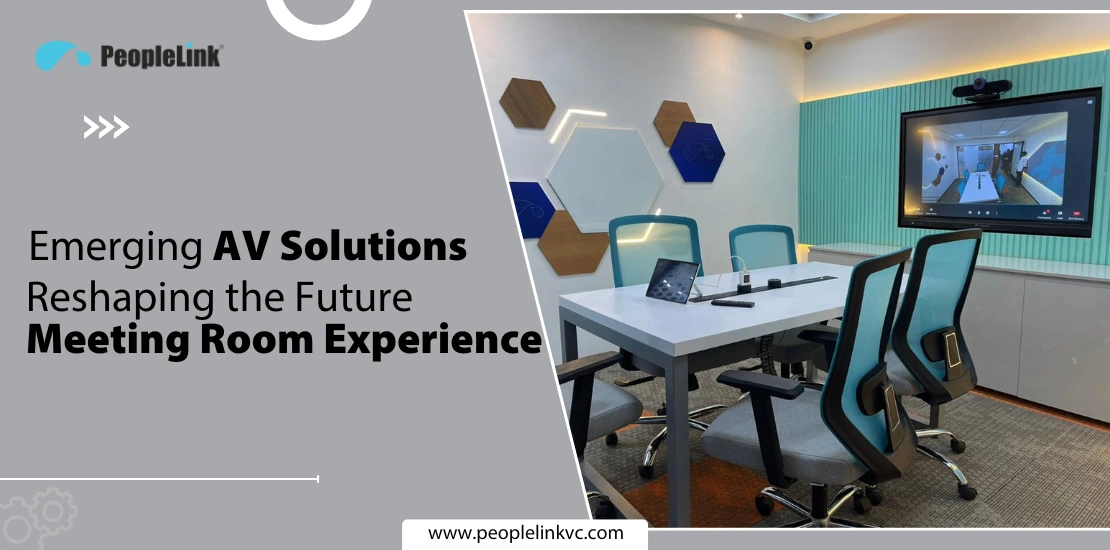
AV solutions are transforming the future of meeting rooms by connecting office teams and remote workers into one seamless group. This technology uses smart cameras and clear audio to make sure everyone can see and hear each other perfectly. It creates a fair experience where people at home feel just as important as people in the room. The goal of these solutions is to remove technical problems so collaboration happens naturally. This builds a bridge between different locations and makes hybrid work effective for every employee.
Why has the Nature of the Meeting Room changed?
Think about a typical meeting for a moment. For decades, the rule was simple. If you were in the room, you were part of the conversation. If you weren’t, you missed out. But today, that dynamic is far more complex. The technology of business communication has shifted. We are no longer just connecting person-to-person; we are connecting a live, physical group to individual digital participants.
Moreover, this mix creates a unique challenge that standard video conferencing systems were never built to handle.
See, it is easy when everyone is at home on their own laptop. Everyone has the same-sized box on the screen, so everyone is equal. But when half the team is sitting around a table and the other half is dialing in from home, traditional meeting room setups break down. The playing field is no longer even. The people in the room have a natural advantage, while the remote workers often feel like they are just watching a show rather than participating in it.
So, the nature of the meeting room has to change to fix this imbalance. In this new context, a meeting room is only successful if it makes everyone feel like they are sitting at the same table, even if half the team is miles away.
The New & Emerging AV Solutions Driving the Change
If the nature of the meeting has changed, then the purpose of the room must change with it.
In the past, the meeting room’s job was to hold the people inside it. But now, the room has to do much more. If the room fails to do this, your teams and collaboration fall apart.
The new purpose is to act as a bridge that treats everyone equally. For many communication businesses and IT leaders, we call this concept “meeting equity.” This simple concept means the experience should be the same for everyone, no matter where they are sitting. The person dialing in from their kitchen table should have the same ability to speak, see, and be heard as the person sitting at the head of the conferences room table.
When a meeting room does its job right, you stop thinking about where people are and let effective work collaboration happen naturally.
1) Intelligent Video Meeting Hardware
- Multi-Camera Systems: These setups use several cameras positioned around the room to capture every person from the best possible angle.
- AI-Powered PTZ Cameras: This camera automatically pans, tilts, and zooms to follow the speaker as they move around the room.
- Dual-Lens Cameras: This device uses two separate lenses to capture both the whole room and close-up details simultaneously.
- 4K All-in-One Video Bars: This sleek device combines a high-quality camera, microphone, and speakers into a single unit that sits neatly under your TV.
2) Immersive Visual Displays
- 21:9 Aspect Ratio Displays: This extra-wide screen gives you enough space to see the presentation and the faces of remote participants side-by-side.
- Interactive Touch Displays: These screens act like giant tablets that allow you to draw, write, and move objects around with your finger.
- Transparent OLED/LED Screens: These clear screens look like glass but display digital images, allowing you to see data without blocking the view behind it.
- VR/AR Headsets & Glasses: These wearable devices transport you into a fully virtual 3D meeting space where you can interact with digital objects.
3) Next-Gen Audio Systems
- Beamforming Ceiling Tile Microphones: These invisible microphones hide in the ceiling and use audio beams to pick up voices clearly from anywhere in the room.
- Audio Fencing Technology: This feature creates an invisible sound shield that completely blocks out any noise happening outside the meeting area.
- Spatial Audio Speaker Systems: These speakers trick your brain into hearing a person’s voice coming from their specific location on the screen.
- AI Noise Cancellation Processors: This smart algorithm instantly filters out distracting background noises like typing, paper shuffling, or air conditioning.
4) AI & Software Enhancements
- Intelligent Framing Software: This program automatically crops and adjusts the video feed to remove space and keep the focus on the people.
- Real-Time Transcription & Translation Engines: This tool instantly turns spoken words into text captions and can even translate them into different languages live.
- Meeting Equity Algorithms: This smart logic rearranges the screen layout so that remote participants look just as large and important as the people in the room.
- Automated Meeting Assistants: This digital bot joins your call to record the conversation, take notes, and send out a summary afterwards.
- Platform Interoperability Licenses: This software key allows your meeting room hardware to work seamlessly with different apps like inMeet, Zoom, Teams, or Google Meet.
5) Room Intelligence & Control
- Wireless Content Sharing Systems: This tool lets you throw your laptop screen onto the main display with a single click and no messy cables.
- Room Scheduling Panels: This small tablet mounts outside the meeting room door to show if the room is free or booked for a meeting.
- Occupancy Sensors: These hidden sensors detect when a person walks into the room and automatically turn on the lights and equipment.
- Voice-Activated Room Controls: This system lets you start the meeting or adjust the volume just by speaking a simple command.
- Cloud-Based Remote Management Dashboards: This online portal allows the IT team to fix problems and update software for every meeting room without leaving their desk.
The Role of AV Integration in Modern Meeting Rooms
In the past, getting a meeting room to work was often a frustrating struggle. There were too many messy wires and confusing remote controls to figure out. AV integration is the simple solution that fixes this mess for modern offices. It connects your cameras, microphones, and screens so they all talk to each other perfectly.
Instead of fighting with loose cables, the whole room now works as one smooth system. You can walk in, press a single button, and start your meeting instantly. The video looks sharp on the screen, and the audio is loud and easy to understand. This technology stays in the background so you can simply focus on talking to your team. It turns a basic room with a table into a smart space where collaboration happens easily.
7 Ways Modern AV Technology Is Transforming Collaboration
- It is making collaboration frictionless. Old meetings were full of friction. You struggled with cables, you fought with settings, and you wasted the first ten minutes just getting connected. Modern AV removes these hurdles. With wireless sharing and one-touch join systems, technology fades into the background. You walk in, you click once, and you work. It clears the path so your team can focus entirely on the conversation.
- It is boosting active participation. In the past, remote participants often just sat and listened. They were passive observers. Interactive displays and digital whiteboards change this completely. Now, everyone can pick up a digital pen and contribute. It turns a boring update meeting into an active, hands-on workshop where ideas flow from everywhere, not just the head of the table.
- It is reducing misunderstandings and improving clarity in communication. We communicate with more than just words. We use tone, facial expressions, and hand gestures. Standard audio often strips these away, leading to confusion. High-definition video and spatial audio bring these non-verbal cues back. You can see if someone is confused. You can hear the sarcasm in a joke. This clarity prevents expensive mistakes and ensures everyone understands the true intent behind the words.
- It is making participation equal for everyone, everywhere. In a standard setup, the people in the room naturally dominate the conversation because they are physically larger and louder. Modern AV systems completely remove this imbalance. The technology works behind the scenes to create an experience consistent for everyone, so people can take part of the interaction rather than just watching from the sidelines.
- It is creating a single, shared experience that feels personal and connected. Hybrid work often feels like two separate meetings happening at once, one in the room and one online. Modern AV merges these worlds by tricking your brain into feeling like you are all sitting in the same physical space.
- It is transforming workplaces by optimizing space and efficiency. Modern rooms are smart enough to manage themselves. They use sensors to detect if a room is empty or full. If a meeting is canceled, the room automatically frees itself up for someone else to use. This means your team isn’t wasting time walking around the office hunting for a free space. The technology ensures the right space is always available for the collaboration that needs to happen.
- It is automating and simplifying meeting workflows. Finally, modern technology handles the administrative side of collaboration so humans don’t have to. AI assistants now join the meeting to transcribe the conversation, summarize key decisions, and automatically assign action items.
Key Trends Shaping the Future of Meeting Rooms
- Better Integration of AI: As one of the leading AI solutions for business, this technology is currently used to improve video and audio quality. In the future, it will become a super-smart assistant that anticipates your needs in real-time. For example, AI will instantly translate languages so international teams can speak naturally. It will pull up relevant documents before you even ask for them. It will even analyze the sentiment of the room, letting you know if the team is engaged or confused.
- More Smarter Spaces: In the future, our meeting room will become more advanced. Using advanced IoT sensors, the room will know exactly who is inside and what they are doing. For example, if you walk in for a creative brainstorm, the lights will brighten to keep energy high. If you settle in for a calm review, the temperature and lighting will soften. The room will automatically book itself when you enter and release the booking the moment you leave, ensuring that space is never wasted.
- More Immersive Collaboration: We are breaking through the flat screen. Future meetings will use spatial computing and holographic displays to bring remote participants into the room in 3D. This depth adds a layer of realism that makes remote collaboration feel exactly like the person is sitting in the chair across from you.
- Autonomous Meeting Agents: In the future, you will have a personal AI agent that can attend meetings for you. Unlike a simple recording, this agent can ask questions, vote on polls, and answer routine queries on your behalf based on your preferences. It allows you to be “present” in three places at once, so you can stay informed without drowning in calendar invites.
- Voice & Gesture-Controlled Interfaces: The days of fumbling with a complicated touch panel are ending. Future rooms will be controlled entirely by natural language and movement. For example, you will simply walk in and say, “Start the marketing meeting,” and the room will connect the call, launch the presentation, and adjust the volume. If you want to move a slide, you will just have to wave your hand.
FAQs
How are AV solutions changing modern meeting rooms?
Modern AV solutions are turning meeting rooms into smart bridges that connect in-person and remote teams equally. Instead of just holding people, these rooms now use technology to make sure everyone can see, hear, and participate as if they were sitting at the same table.
Why are AV technologies important for future workplaces?
As more people work from home, these technologies are essential for keeping the playing field even. They ensure that remote workers are not just watching from the sidelines but are fully included in the conversation, which keeps the whole team connected.
What technologies are shaping the meeting rooms of the future?
The main technologies driving this change are AI-powered cameras that zoom in on speakers and spatial audio that makes voices sound natural. We are also seeing interactive displays for drawing ideas and smart sensors that automatically turn on equipment when you walk in.
How do AV solutions improve team collaboration?
These tools remove technical friction, allowing teams to start meetings instantly without struggling with cables or settings. Interactive screens and digital whiteboards also let everyone add notes and contribute ideas in real-time, making the meeting an active workshop rather than a lecture.
How do AV tools improve meeting room efficiency?
Smart sensors can detect when a room is empty and automatically free it up for others to use, which prevents wasted space. Automation also handles tasks like lighting and connectivity, so employees spend their time working instead of setting up equipment.