

Why are Virtual Healthcare Visits Becoming Popular?
- December 5, 2025
- Posted by: Abhishek Pratap Singh
- Categories: Blogs, TeleHealth Solutions
Quick answer: Healthcare video technology connects patients, doctors, and specialists across distance for consultations, remote monitoring, and medical collaboration. It matters because it widens access to care and speeds specialist input. PeopleLink delivers healthcare AV and the inClinic consultation platform, from secure room hardware to telehealth carts, as a single OEM.
Virtual healthcare visits are transforming the way patients receive medical support, offering faster, more convenient, and highly accessible care. As telehealth adoption continues to grow, healthcare providers are increasingly relying on secure video platforms to deliver real-time consultations without the need for physical appointments. This shift enhances communication between doctors and patients, minimizes travel challenges, and ensures reliable care reaches people in distant or busy locations. In this article, we will explore the specific reasons behind this major shift and explain why it is changing healthcare for the better.
Extending care across locations? See PeopleLink’s healthcare and telemedicine solutions.
What is a Virtual Healthcare Visit?
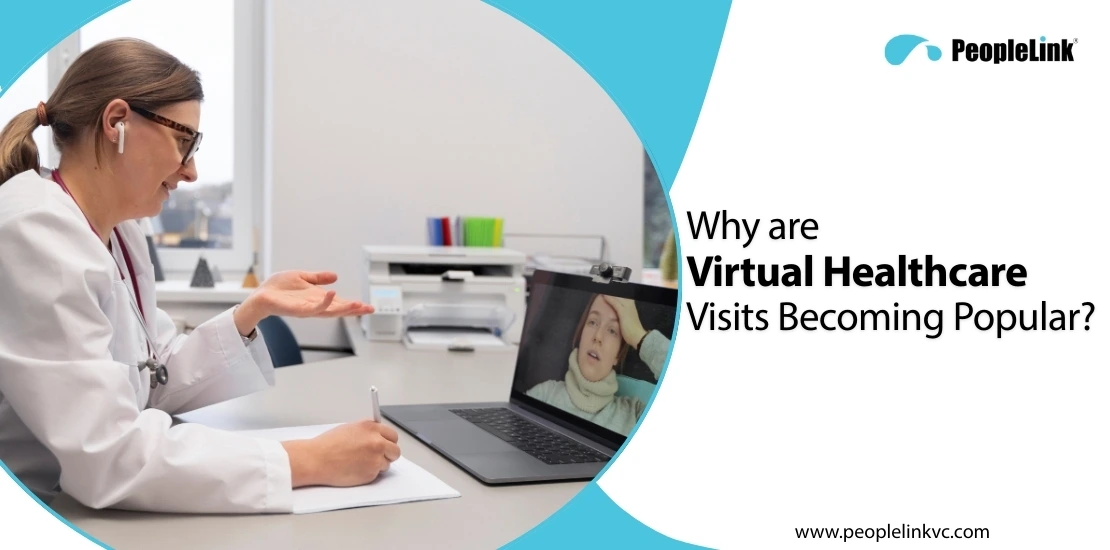
A virtual healthcare visit is a medical appointment that happens over a video call instead of in a physical office. It allows you to speak with a doctor or nurse using your smartphone, tablet, or computer. You can see and hear the doctor in real time, just like you would during a face-to-face conversation. During this visit, you can describe your symptoms, show visible issues like a rash to the camera, and ask questions about your health. The doctor can then give you a diagnosis, recommend a treatment plan, or even send a prescription directly to your pharmacy. It effectively turns your living room into a temporary doctor’s office for a few minutes.
Why Are Virtual Visits Becoming Popular in Healthcare?
In a medical emergency, the doctor needs to know exactly what is happening to make the right decision. For decades, communication in healthcare happened over the phone during emergencies. The doctor had to rely entirely on a voice description from a paramedic or a bystander. While this was helpful, it was often incomplete because words cannot capture everything. Many medical problems show early warning signs on the outside. A sudden swelling, unusual sweating, or rapid breathing can tell a doctor that something is wrong. Through video, these signs become visible in real time, allowing the doctor to act quickly, even from miles away. A key advantage of Video Conferencing in Healthcare is that it restores this missing visual link, which is critical for establishing trust in doctor patient relationships even during a crisis. It allows the doctor to see the patient directly through a camera, rather than just imagining the scene based on a description. This visual assessment turns a guess into a certainty. It provides the doctor with the complete picture immediately. This clarity allows them to make safer, faster, and more accurate choices when time is running out. This illustrates the true value of Video Conferencing in Healthcare. It turns a standard video call into a life-saving medical tool.
Reason #1: Habit Formation
- Necessity: During global shutdown, most clinics physically closed their doors to regular visitors. If you had a non-emergency issue, online consultations were literally the only option available. This forced a rapid change in the entire health care delivery system, making doctors and patients try technology they were previously unsure about.
- Habit Formation: Once the clinics reopened, many people did not want to go back to the old way of doing things. They had realized that virtual visits worked perfectly well for routine check-ups, so they continued using them out of habit and convenience.
Reason #2: It is Beneficial for Patients
One of the main advantages of telemedicine is that it removes the physical and logistical struggles that make going to the patients stressful.
- Patient-Centric Convenience: This is the main reason patients stick with virtual visits long-term. In the past, healthcare revolved around the doctor’s schedule, but now it fits into the patient’s life. It transforms a medical appointment from a major daily disruption into a simple, manageable task.
- Zero Commute: Patients no longer have to deal with the stress of traffic, finding a parking spot, or navigating public transport. Remote consultations that used to require hours of travel time now take zero travel effort.
- No Waiting Rooms: The most frustrating part of seeing a doctor is often sitting in a crowded room with other sick people for a long time. Virtual visits eliminate this entirely because you wait in your own home. You only log in when the doctor is ready.
- Work/Life Balance: In the past, a doctor’s appointment meant taking a day off from work. Now, a visit can happen any time you want. It removes the need to rearrange your entire life just for a 15-minute doctors appointment.
- Comfort: Many people feel nervous or intimidated when they are in a typical clinic or hospital. Being in the privacy of their own home helps patients feel relaxed and safe. This makes it easier for them to speak openly about sensitive health issues.
- Cost Savings for Patients: Beyond just the medical bill, going to the doctor costs other transports chargers. Virtual visits completely remove these hidden travel costs. Additionally, many insurance plans now offer lower co-pays for video calls, making it cheaper overall.
Reason #3: It is Beneficial for Doctors
This healthcare technology gives providers more control over their schedules while helping them treat patients faster.
- Work-Life Balance: Just like patients, doctors gain flexibility by working from home or remote locations. They can finish their charts and see patients without being tied to a specific hospital room all day. This reduces burnout and makes their daily schedule much more manageable.
- Provider Efficiency: Doctors can move from one patient to the next much faster on a computer than in a physical building. There is no downtime spent waiting for a room to be cleaned or for a patient to walk down the hall. This allows them to help more people in the same amount of time.
- Better Triage: Virtual Telemedicine act as a great first step to see how serious a problem really is. The doctor can quickly decide if a patient needs a prescription or if they need to rush to the emergency room. This keeps their schedule clear for the patients who truly need physical attention.
Reason #4: It is Beneficial for hospitals
The modern health care delivery system use virtual care to lower their operating costs and keep their business running smoothly.
- Reduced “No-Shows”: When it is easy to book an appointment online and log in from a phone, patients rarely miss their visits. Physical obstacles like a flat tire or bad traffic no longer cause cancellations. This ensures that the clinic’s schedule stays full and valuable time isn’t wasted waiting for someone who isn’t coming.
- Lower Overhead: Seeing patients online means hospitals don’t need as many physical exam rooms or large waiting areas. This saves money on rent, electricity, and cleaning services. It allows for better financial management in health care businesses, running efficiently with fewer in-person staff.
- Patient Retention: Patients today will leave a doctor if they find another one who offers better convenience. By offering easy digital visits, hospitals keep their patients happy and loyal. It prevents them from switching to a competitor who might offer a more modern experience.
Reason #5: Technological Improvements
Recent technological advancements in healthcare mean that the tools needed for video conferencing are finally good enough for everyone to use.
- High-Speed Internet: In the past, video conferencing was frustrating because they would freeze or disconnect constantly. Today, widespread high-speed internet and 5G make the connection smooth and reliable. This ensures the doctor doesn’t miss important details, allowing for accurate remote diagnosis without a blurry screen.
- Better Hardware: Almost everyone already owns a smartphone or laptop with a high-quality camera. This means patients don’t need to buy any special medical equipment to see a doctor. Since the clear camera is already in their pocket, the barrier to entry is extremely low.
- Simple Apps: Early medical software was clunky and hard to use, which scared people away. Modern patient management systems or virtual clinic platforms are now as simple as clicking a single link in a text message.This makes it easy for everyone, including elderly people who aren’t “tech-savvy,” to use the system.
Reason #6: Expanded Access to Care
Virtual visits democratize healthcare access for populations that were previously underserved.
- Rural Reach: People living in small towns often had to travel hours to see a specialist in a big city. Virtual visits erase this distance, bringing top-tier experts directly into rural homes. Location is no longer a barrier to getting the best possible care.
- Mobility Solutions: For elderly people or those in wheelchairs, the physical act of leaving the house is difficult and exhausting. Virtual visits remove the physical burden of navigating to hospital.
- After-Hours Availability: Sickness doesn’t always happen during business hours, and virtual platforms often operate 24/7. This connects patients to doctors late at night or on weekends instantly. It saves them from expensive long trips to the Urgent Care for minor problems.
Reason #7: Changing Consumer Expectations
Patients now expect their medical experience to be as fast and digital as the rest of their lives.
- On-Demand Economy: People are used to getting everything instantly nowadays. They now expect healthcare to have the speed and convenience, too. The old model of waiting weeks for an appointment simply feels outdated to the modern consumer.
- Digital First: Many patients dislike making phone calls and prefer to handle everything via apps or text. They want the ability to book digital appointments and chat with doctors instantly. Virtual visits align perfectly with this preference for digital communication over face-to-face interaction.
- Information Access: Patients today want to be more involved in the management of health information and their own healthcare journey. They expect instant digital access to their records, test results, and doctors’ notes. Virtual platforms usually come with portals that give patients this transparency and control.
Is Virtual Visit just a trend, or is it here to stay forever?
Many people wonder if we will stop using Video conferencing to connect with doctors. The short answer is no. Now that everyone knows how much time it saves, nobody wants to go back to the old, slower way. It is now a standard tool in the modern medical care system.
Will virtual visits replace in-person doctor offices eventually?
This is not going to happen. Healthcare is unique industry because it often requires physical assessment for a doctor to evaluate patient condition. This is not possible through a virtual screen. Therefore. you can expect the future to be a hybrid model. This means you will use digital tools for the simple stuff and physical visits for the serious stuff. The goal is not to close hospitals. The goal is to make sure that when you do go to a hospital, it is for a reason that actually requires you to be there.
So, When is Virtual Healthcare Visited the Best?
To maximize the benefits of virtual care, you just need to know when to use which tool, you just need to know when to use which tool. Virtual visits shine when the problem can be solved by talking or looking. This makes them the best choice for mental health therapy, where conversation is the main treatment. It is also excellent for skin issues like rashes that a camera can easily see. It is perfect for follow-up appointments to review blood test results or to get a refill on a prescription you have taken for years. If you just have a common cold, a minor eye infection, or seasonal allergies, the virtual visit is the superior choice. It keeps you comfortable at home while still giving you the medical advice you need.
Essential Requirements to Enable Virtual Visits in Your Hospital
Setting up a virtual visit system in a hospital requires a few specific building blocks to make it work safely and effectively.
- The Right Hardware (Audio & Video): The first requirement is the right hardware for the medical staff. Doctors need high-quality cameras and clear microphones to see and hear their patients without any confusion. If the picture is blurry, a doctor might miss a visual symptom, so the equipment must be better than a standard laptop webcam.
- The Right Software: The second requirement is a specialized software platform. This is the computer program that actually connects the call, highly secure to keep private medical records safe from hackers. The software must also be simple enough that a patient who is not good with computers can use it easily. This software also needs to connect to your hospital’s existing tools for the management of health information so that medical records stay updated.
- Strong & Stable Internet: Finally, the system needs to have a strong internet connection. A medical consultation cannot happen if the video is freezing or if the audio cuts out, so the hospital needs a dedicated network to handle these video calls without interruption.
Enable Virtual Healthcare Visits with PeopleLink Today
To start offering virtual visits, you do not need to piece together cameras from one store and software from another. You can choose a single partner like PeopleLink who can provide you with a complete telehealth solution that handles everything for you. For example, one of the core offerings under telehealth that we provide is PeopleLink Telemedicine Cart, which comes pre-built with a high-quality camera and screen on a durable, movable stand. You can simply roll this cart to wherever your doctors are working, plug it in, and they are ready to see patients immediately. On the software side, PeopleLink provides a secure platform called inClinic. Unlike standard video apps, inClinic is built specifically for hospitals to be secure and compliant with privacy laws. It allows doctors to schedule appointments, manage patient records, and write prescriptions all within the same window where they see the patient. Beyond basic checkups and patient remote monitoring, PeopleLink offers advanced tools for complex situations. PeopleLink offers advanced tools for complex situations. We have, for example, an Emergency Medical Services (EMS) solution that equips ambulances with cameras and internet connectivity. This allows emergency doctors at the hospital to see and assess a patient while they are still on the road, saving vital minutes before arrival. By choosing PeopleLink, you can start offering virtual visits to your patients immediately. To get started, simply contact our team today, and we will help you set up a virtual healthcare system that is ready to use immediately.
FAQs
Why are virtual visits becoming popular today?
Virtual visits are becoming popular because they save time and eliminate the need to travel to a clinic. What started as a safety necessity has stayed popular because patients and doctors realized how much easier it is to connect online.
What conditions can be treated through virtual visits?
Doctors can easily treat common issues like colds, skin rashes, and allergies over Virtual Telemedicine. They are also excellent for mental health therapy, follow-up appointments, and refilling prescriptions without needing a physical exam.
Are telehealth visits secure for sharing medical information?
Yes, virtual visit platforms are highly secure and designed to protect your privacy. They use special encryption technology to ensure that your virtual Telehealth and medical records remain completely private between you and your doctor.
How do virtual visits make healthcare more convenient?
They allow you to see a doctor with a convenience of connecting with them virtually. You have more options today on how and when you want to connect with the doctors. This way, you can easily fit an appointment into a lunch break instead of taking half a day off work to travel.

Ready to upgrade your rooms?
See PeopleLink’s AV and Unified Communications solutions in action, or get pricing built around your needs.