

Video Conferencing in Healthcare: How It Connects Doctors and Patients
- November 26, 2025
- Posted by: Abhishek Pratap Singh
- Categories: Blogs, TeleHealth Solutions
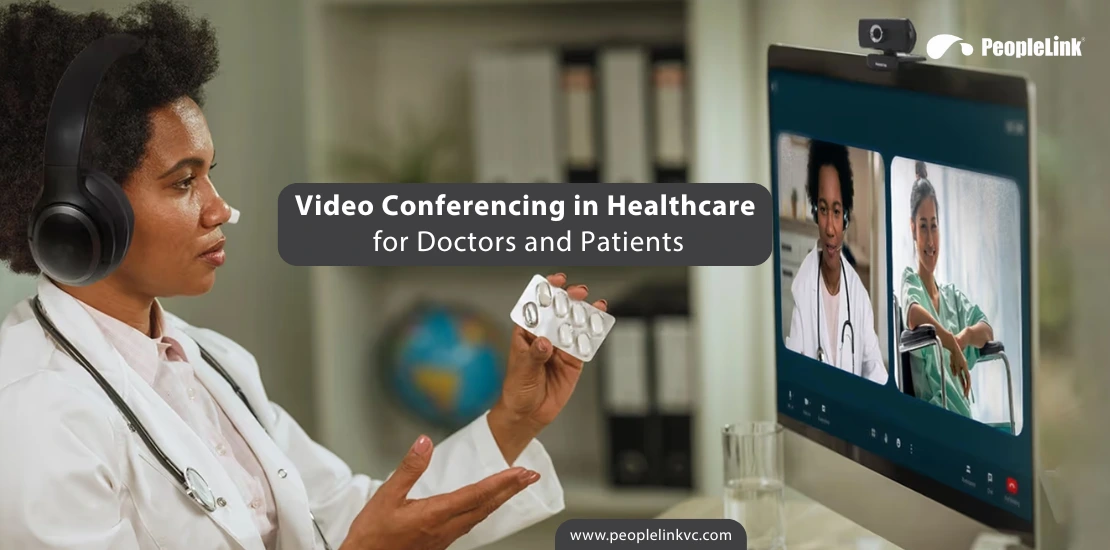
Quick answer: Healthcare video technology connects patients, doctors, and specialists across distance for consultations, remote monitoring, and medical collaboration. It matters because it widens access to care and speeds specialist input. PeopleLink delivers healthcare AV and the inClinic consultation platform, from secure room hardware to telehealth carts, as a single OEM.
Video conferencing in healthcare is reshaping how doctors and patients connect, making medical care faster, safer, and more accessible. With the rise of telehealth and virtual consultations, hospitals now use secure video platforms to provide real-time medical support without requiring in-person visits. This technology improves doctor-patient communication, reduces travel, and ensures quality care reaches remote and busy regions. In this article, we explain what video conferencing in healthcare means, highlight 15 ways hospitals use it daily, uncover its key benefits, and show how PeopleLink TeleHealth Solutions helps healthcare providers deliver smarter, connected, and efficient digital healthcare services.
Extending care across locations? See PeopleLink’s healthcare and telemedicine solutions.
What is Video Conferencing in Healthcare?
At its simplest level, video conferencing in healthcare is the use of medical technology to connect a patient and a doctor visually and audibly, even when they are miles apart. It improves communication in healthcare by working just like a standard conversation, but instead of sitting in the same room, the interaction happens through a screen. It allows doctors to see, hear, and talk to patients in real-time using the internet. Traditionally, if you felt sick, you had to travel to a clinic, wait in a lobby, and physically meet a doctor. With video conferencing, this physical meeting is replaced by a digital one. You use a smartphone, tablet, or computer with a camera to meet the doctor. The doctor uses their own screen to see you, ask questions, and look for physical signs of illness. While it feels similar to using FaceTime… specialized telehealth video conferencing is different. It is essentially a “Virtual Clinic.” When you video call a friend, the goal is just to chat. When you video call a doctor, the goal is to solve a medical problem. Because of this, the video tool has often become part of larger digital health platforms used by the hospital. During the call, the doctor can pull up your medical history, look at your past X-rays on their screen, and type notes into your permanent health file, just as they would if you were sitting in their office. The core idea is removing distance to improve doctor patient relationships and remove barriers to care. Think of it as bringing the doctor’s office into your living room. It changes the medical experience from something you have to go to, into something that comes to you. Whether it is a quick check-up for a flu, a therapy session, or a follow-up after surgery, video conferencing bridges the physical gap. It ensures that a patient can receive professional online medical advice and treatment without the physical burden of travel. This practice is often referred to broadly as telemedicine healthcare or Telehealth.
15 Ways Hospitals Are Using Video Conferencing Daily
1. Telepsychiatry
This is likely the most common use of video in healthcare today. Instead of driving to a clinic, patients can connect with a psychiatrist or therapist from the privacy of their own home. It makes mental health support more accessible and less intimidating for patients dealing with anxiety, depression, or stress.
2. Virtual Rehabilitation
Recovering from an injury or stroke often requires physical therapy exercises. With virtual rehabilitation, a physical therapist watches the patient perform these exercises over a video call. They can correct the patient’s form and track their progress without the patient needing to travel to a gym or hospital gym while in pain.
3. Teleconsultation & Outpatient Diagnostics
This is the standard ‘virtual doctor visit,’ often referred to as online medical consultations or telemedicine consultations. It is used for routine issues like the flu, skin rashes, or follow-up questions. The doctor and patient talk face-to-face on a screen, and the doctor can visually examine the patient (e.g., “show me your throat”) to decide if they need medicine or further testing. Documenting these visits accurately requires structured clinical notes software that supports remote consultation workflows.
4. Critical Care Monitoring
Patients in critical condition need 24/7 observation. Video cameras allow specialists to monitor a patient’s status continuously from a central station. If they see a sudden drop in the patient’s condition on the screen, they can immediately alert the nurses on the floor to intervene.
5. In-Patient Support
Being in the hospital can be lonely and confusing. This application uses bedside tablets to let patients easily video call hospital support staff to request patient care services or non-medical needs for non-medical needs (like fixing the TV or ordering food) or to connect with their family members who cannot visit in person.
6. Patient Consent Recording
Before a major procedure, a patient must agree to it legally. Hospitals now use video to record the doctor explaining the risks and the patient saying “yes.” This creates a clear, digital record that proves the patient understood what would happen, protecting both the patient and the hospital.
7. Hybrid Operating Rooms & Live Proctoring
Sometimes, a surgery is very complex. Hospitals use high-quality video in the operating room to stream the surgery live to a top expert located elsewhere. This remote expert (the proctor) can watch and guide the local surgeon in real-time, ensuring the patient gets the benefit of world-class expertise during their operation.
8. Emergency Medical Services (EMS) Ambulance Solution
This connects the ambulance crew to the emergency room doctors while they are still driving to the hospital. The paramedics can show the patient’s injuries to the doctor via video, allowing the hospital team to prepare the exact equipment and medicine needed before the ambulance even arrives.
9. Virtual ICU Care (eICU)
An eICU is like a command center where a single specialized doctor watches over dozens of ICU patients in different hospitals simultaneously via video. It adds an extra layer of safety, ensuring that even if the bedside doctor is busy with one patient, the “virtual” doctor is still watching the others.
10. Disaster Response & Virtual Emergency Response
In major events like earthquakes or large accidents, there are often too many patients for on-site doctors to handle. Video conferencing allows remote doctors to look at patients through cameras quickly and tell the on-site team which patients need immediate help and which ones can wait (triage).
11. Digital Rounding & In-Patient Visits
Doctors typically walk from room to room to check on hospitalized patients (rounds). Digital rounding allows the doctor to “beam in” to the patient’s room monitor to check on them. This saves the doctor travel time and allows them to see patients more frequently.
12. Remote Patient Monitoring (RPM)
Patients with chronic conditions like heart disease often use wearable devices at home. If the device detects a problem, the doctor can initiate a video call. Using video conferencing for patient monitoring connects the “numbers” from the device with a real conversation. It connects the “numbers” from the device with a real conversation about how the patient is feeling.
13. Post-Acute Care
After a patient is discharged from the hospital, the first few days are critical. Instead of making the weak patient come back to the hospital for a check-up, doctors use video calls to check surgical wounds, review medications, and ensure the patient is recovering safely at home.
14. Virtual Group Therapy
This connects one therapist with a group of patients who have similar conditions, such as addiction or grief. Everyone joins the same video call from their own homes, allowing them to share experiences and support each other under the guidance of a professional.
15. Tele-Pharmacy Counseling
Medications can be confusing. This service allows patients to video call a hospital pharmacist to ask questions about their prescription, side effects, or how to take their pills correctly. It ensures patients don’t make dangerous mistakes with their medicine after they leave the hospital.
5 Amazing Benefits of Using Video Conferencing in Healthcare
In the past, getting a meeting room to work was often a frustrating struggle. There were too many messy wires and confusing remote controls to figure out. AV integration is the simple solution that fixes this mess for modern offices. It connects your cameras, microphones, and screens so they all talk to each other perfectly. Instead of fighting with loose cables, the whole room now works as one smooth system. You can walk in, press a single button, and start your meeting instantly. The video looks sharp on the screen, and the audio is loud and easy to understand. This technology stays in the background so you can simply focus on talking to your team. It turns a basic room with a table into a smart space where collaboration happens easily.
1. It Makes Medical Care More Comfortable
Medical appointments can often feel stressful or intimidating. Video conferencing removes the clinical “hospital” atmosphere and replaces it with a familiar setting.
- For the Patient: You can speak to the doctor from your own couch or bed. You do not have to sit in a cold, crowded waiting room or wear a hospital gown. You can stay in the place where you feel most safe and relaxed.
- For the Doctor: When patients are relaxed in their own homes, they tend to be more open and honest. Doctors can also get a glimpse of the patient’s living environment, which might give them clues about their health that they wouldn’t see in a clean, white office. This relaxed atmosphere helps build trust and strengthens doctor patient relationships.
2. It Helps Patients Stay Consistent with Their Care
One of the biggest problems in healthcare is that people skip appointments. Life gets in the way. Video calls remove the barriers that usually cause people to cancel.
- For the Patient: It is much easier to keep an appointment when you don’t have to take a half-day off work or find a babysitter. You can hop on a call during a lunch break or while the kids are napping.
- For the Doctor: Doctors see fewer “no-shows.” When patients actually attend their follow-up visits, the treatment works better. The doctor can monitor progress more closely and catch small problems before they become big ones.
3. It Makes It Easier to Reach Specialists Far Away
Sometimes the best doctor for your specific problem does not live in your town. In the past, this meant long, expensive travel. Video conferencing and telehealth services online remove distance from the equation.
- For the Patient: You can consult with a top expert in another city or state without leaving your house. It gives people in rural areas or small towns access to the same quality of care as people living in big cities.
- For the Doctor: Specialists and health care providers can help a wider group of people. They are not limited to treating only the people who live within driving distance of their clinic. They can offer their expertise to patients all over the country.
4. It Saves Time for Everyone
A standard doctor’s visit often involves hours of travel and waiting for just 15 minutes of conversation. Video conferencing strips away the wasted time.
- For the Patient: You save the time spent driving in traffic, finding parking, and sitting in the lobby. The appointment fits into your life, rather than taking over your whole day.
- For the Doctor: The workflow is more efficient. Doctors can move from one patient to the next without waiting for exam rooms to be cleaned or patients to settle in. This allows them to focus more energy on the actual medical care.
5. It Lowers the Chance of Catching New Illnesses
Hospitals and clinics are full of sick people. Going to the doctor to fix a sore knee might accidentally expose you to the flu. Video calls create a digital safety barrier.
- For the Patient: You avoid sitting in a waiting room next to someone who is coughing or sneezing. It is the safest way to get medical advice without exposing yourself to viruses.
- For the Doctor: Healthcare workers are constantly exposed to sick patients. Video calls reduce the number of contagious people entering the office, which helps keep the doctor and their staff healthy and available to work.
Connect Your Doctors to Patient with PeopleLink TeleHealth Solutions
Connect Your Doctors to Patient with PeopleLink TeleHealth Solutions When a hospital decides to start using video conferencing, they often realize that a standard video app is not enough. Medical care requires higher security, clearer video, and tools that are designed specifically for health. PeopleLink understands the intersection of tech and health, which allows it to provide a complete solution-both the software you see on the screen and the hardware inside the hospital-to make these connections happen seamlessly. Here’s the glimpse of how PeopleLink helps hospitals connect with their patients:
- Virtual Clinic platform: We provide inClinic software which act as “hospitals in your pocket”. This software allows patients to book appointments and consult doctors via video from any device. It is designed to work smoothly even on slow internet connections, ensuring people in remote villages can still reach top specialists.
- Tele-ICU Carts for Critical Care: We provide specialized medical carts on wheels equipped with high-powered cameras that stand next to a patient’s bed. They allow a remote expert to control the camera, zoom in to read monitors, and watch over critically ill patients as if they were standing right there.
- Connected Ambulances (EMS): PeopleLink turns an ambulance into a moving video hotspot that connects paramedics to emergency room doctors instantly. This allows the hospital team to see the patient’s injuries live and guide the treatment while the ambulance is still rushing to the hospital.
- Secure Patient Consent Recording: We provide a dedicated tool that securely records the conversation where a doctor explains a surgery’s risks to a patient.
Get Started With PeopleLink Today Transforming your hospital into a “smart hospital” does not have to be complicated. At PeopleLink, we are ready to help you build a healthcare system that connects doctors and patients seamlessly, no matter the distance. Whether you are looking to integrate telemedicine and video conferencing platforms, we have a solution that fits your needs and your budget. Contact PeopleLink Today to embrace the future of telemedicine and bring better care to your patients.
FAQs
How is video conferencing used in medical emergencies?
Doctors use video to see a patient’s injury while they are still in the ambulance. This helps them decide exactly what treatment is needed before the patient even arrives at the hospital. It saves critical time when every second counts.
Can doctors provide live emergency guidance through video?
Yes, doctors can watch live video of a patient and tell paramedics exactly what to do. This allows experts to guide life-saving procedures even if they are miles away from the scene.
Is video conferencing reliable for critical situations?
Yes, hospitals use special high-quality video systems that are built to work perfectly during emergencies. These tools are secure and fast, so doctors can trust them to make life-saving decisions without technical problems.
How does video conferencing help hospitals coordinate emergency care?
Video allows the ambulance team to talk to the hospital team before they arrive. This helps the hospital prepare the right room and equipment so they are ready the moment the patient rolls through the door.

Ready to upgrade your rooms?
See PeopleLink’s AV and Unified Communications solutions in action, or get pricing built around your needs.