

Limca Book of Records
- October 14, 2025
- Posted by: Arti Sharma
- Category: Awards
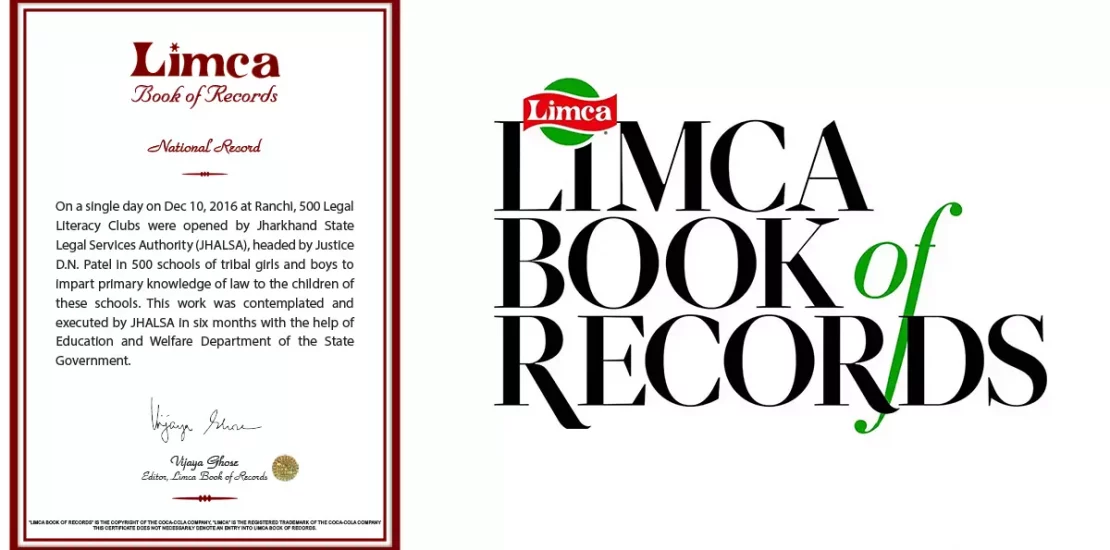
The Limca Book of Records recognised a landmark feat: a live connection of 500 schools for tribal boys and girls over the PeopleLink platform in Jharkhand, organised by the Jharkhand State Legal Services Authority (JHALSA).
Connecting 500 schools at once is a different problem from equipping a single classroom. It is a question of scale, reliability, and reaching learners who are often the hardest to reach. That is exactly the kind of deployment PeopleLink is built for.
Why Large-Scale Connectivity Is Hard
When hundreds of locations join one session, the usual classroom assumptions break down. Bandwidth varies from one site to the next, many sites are in remote or rural areas, and every location needs to come online at the same time and stay stable. On top of that, the people running each room are usually teachers and administrators, not AV engineers, so the experience has to be simple to start and simple to run.
A deployment at this scale only works if the platform is designed for many endpoints and uneven networks from the outset, rather than a meeting tool stretched past its limits.
How PeopleLink Connects Many Sites at Once
PeopleLink’s platform is built to bring large numbers of locations into a single live session, hold quality on modest bandwidth, and be managed centrally so a coordinator can run the event without visiting each site. The same approach underpins PeopleLink’s virtual classroom solutions, which are designed for multi-site teaching rather than one-off calls.
Because PeopleLink designs, assembles and manufactures its cameras, audio, and room hardware and builds its own software, the pieces are tuned to work together, which matters most when the margin for error is multiplied across hundreds of rooms.
Reaching Remote and Underserved Learners
The Jharkhand deployment connected schools for tribal students, learners who are frequently cut off from the teaching, guidance, and opportunities available in larger centres. Technology that holds up on low bandwidth and is easy to operate is what makes reaching them practical rather than aspirational.
This is where video collaboration earns its place in education: not as a gadget, but as the thing that removes distance between a teacher or mentor and the students who need them, wherever those students are.
What This Means for Government and Large Education Programmes
For a state programme or a large institution, the lesson is that scale should be designed in, not bolted on. A standard build, central management, and a single OEM behind the whole stack make a large rollout supportable rather than fragile. PeopleLink’s education solutions map this from a pilot through to a programme spanning hundreds of sites.
The recognition from the Limca Book of Records points to what is possible when the technology is matched to the ambition: an entire network of schools, learning together, at the same moment.
Designing for Reliability at Scale
Reliability across hundreds of sites comes from a few deliberate choices. Endpoints at each location should be simple enough for a teacher to start without a technician, because no programme can place an engineer in 500 schools. Central monitoring lets a coordinator see which sites are connected and step in before a problem spreads. And the platform has to degrade gracefully on weak links, holding audio and shared content even when video quality dips.
These are not features that matter in a single room; they are the difference between success and failure once a deployment spans a whole state. Building on a single OEM stack, where the software and hardware are engineered together, removes the integration gaps that tend to surface only at scale. PeopleLink’s video conferencing platform is built with exactly this kind of large, distributed use in mind.
Frequently Asked Questions
How many locations can join a single PeopleLink session?
PeopleLink’s platform is designed to bring large numbers of locations into one live session. The Jharkhand deployment recognised by the Limca Book of Records connected 500 schools at once over the PeopleLink platform.
Does it work on low or uneven bandwidth?
Yes. Large education deployments often span remote and rural sites, so the platform is built to hold quality on modest bandwidth and keep many locations stable at the same time.
Who uses large-scale video education deployments?
State education programmes, government bodies, and large institutions with many campuses or schools use them to deliver teaching, training, and guidance consistently across a wide network of sites.
How is a large deployment managed?
A coordinator can run the session centrally without visiting each site, using a standard room build and PeopleLink’s single-OEM stack so support and operation stay simple at scale.
Ready to talk to PeopleLink?
See PeopleLink’s AV and Unified Communications solutions in action, or get pricing built around your needs.